Dead Man (Sleep) Walking
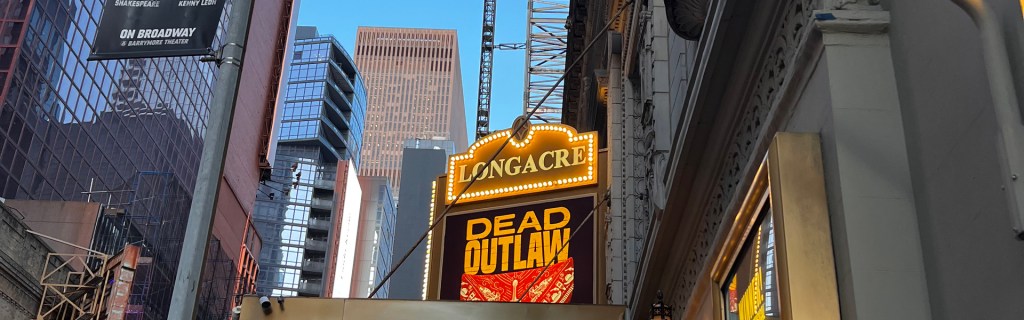
One of my first jobs in high school/college was at an amusement park. The park was/is historic, so many ghost stories “haunted” the rides and even one of the decorative fountains when guests walked in. Needless to say, one of my biggest fears was opening the wrong door to discover one of these “ghosts” in the wild. I forgot I even had that fear until Dead Outlaw. At the beginning of this new musical, amusement park attendants run into a dead body in an assumed (to me?) closet. This starts the weird journey of how the body of Elmer McCurdy became a part of this park in the first place. Pushed forward by great music, Dead Outlaw never finds its groove beyond said music. Instead, we are left with good pieces that do not fit together.
The musical becomes too preoccupied with the “oh, just wait until you hear this next part of the story” that it forgets to settle into the emotion that the music brings to the table. The result is an OK show. You feel like you are just watching a story unfold instead of being invested in the show. The talent is certainly appreciated, but everything else feels a little, well, dead.
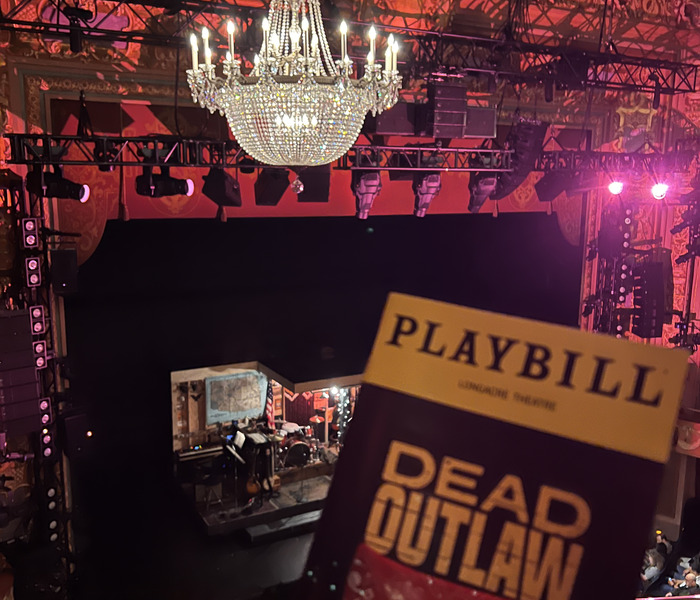
Andrew Durand plays the above Elmer McCurdy, a man who loses a lot at a young age and turns to drinking. That drinking turns into violence which also includes train robberies. He tries to start a family, but cannot quite quit the ghosts that haunt his past. As part of a robbery gone wrong, he gets shot. His body travels through the hands of a swindling coroner, a profitable movie-maker, and eventually into the hands of an amusement park in California. A strange tale, told through the lens of a band in a bar. This band is led by a strong Jeb Brown (with a well-deserved Tony nomination) in a setting similar to hearing these stories being told in a bar. The bar setting is strong, but the empty space throughout the theater swallows the setting. Sitting in the Balcony, the intimate space does not come across as it might in a smaller venue.
That, unfortunately, extends throughout the musical. At points, some characters start singing, then suddenly grab the mic as if singing with the band. I am perfectly fine with that, but it took me right out of the space where the drama unfolds. It makes songs like the one sung by Coroner Noguchi (a fun Thom Sesma) seem out of place and singular instead of a slice in the cohesive whole. I would rather have seen the characters just go up to the mic and start singing, giving more impact to the “singing in a bar” intention the show is clearly pointing out. We can imagine the setting through the music, no need to turn an entire set piece just to give us more hollow space. Again, it does not make the show ineffective, just colder.
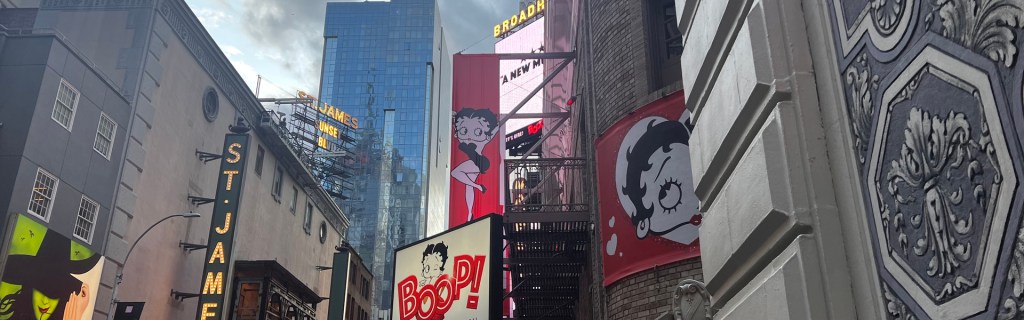
Interestingly enough, the show shares a lot in common with its neighbor Operation Mincemeat a few blocks down. A dead body utilized in a weird true story that many people probably do not know. You cannot compare the shows 1:1, however where Mincemeat succeeds is being consistent with telling the story exactly how they want to (through physical comedy). Dead Outlaw wants to be a Western Romantic Ghost Comedy. It has ounces of success separately, but does not want to work together to form something more interesting than the songs that make up its skeleton.
In other words, it has the body; it just needs a heart.
The Bottom Line: 3.69/5
Running Time: 1 hours and 40 minutes, with no intermission.
Venue Information: Longacre Theatre
220 W 48th St, New York, NY 10036
5 Plays I Thought Of While Writing This Review
- Bonnie & Clyde
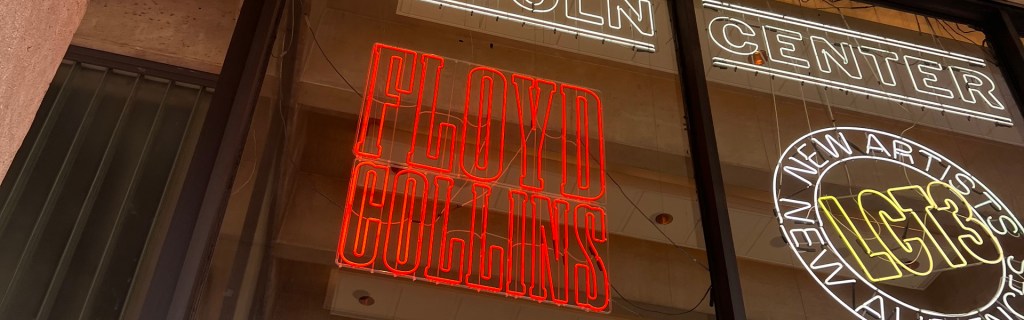
- Floyd Collins
- Operation Mincemeat
- Ghost: The Musical
- Beetlejuice: The Musical



 Really Tall Guy